- Old Line Plate
- Posts
- Celery Soup, Ten Years Later
Celery Soup, Ten Years Later
I revisit my very first recipe.

Kara Harris
February 27, 2025
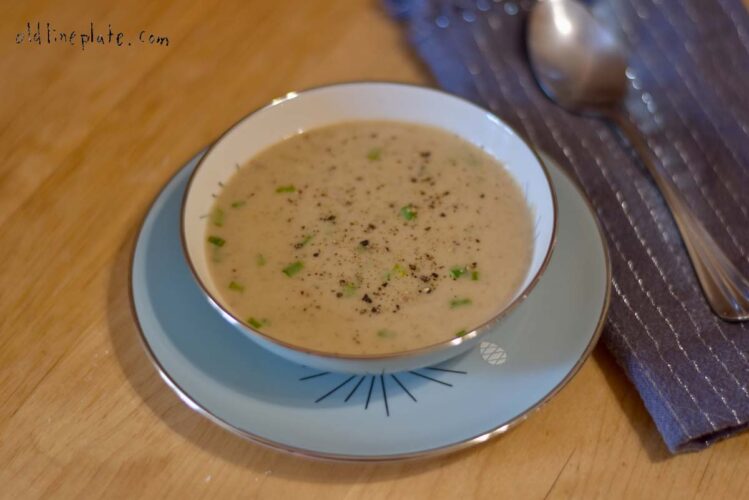
On a winter's day in early 2015, I embarked on a project. On the meager two feet of counter space in my small kitchen, I laid out a bunch of celery, a bag of flour, a brick of fancy butter, milk, soup stock, and salt and pepper. I took a photo before proceeding to follow instructions. "Boil celery until soft." How much celery? I didn't know then and I still don't. Press the celery through sieve. Add to one pint of stock. Thicken with flour and butter. Season with salt and pepper. Add cream.
By this point I knew how to make a roux to thicken soup. I knew I didn't need a double-boiler despite the instructions calling for one. I wasn't the most experienced cook, but I knew my way around the kitchen.
I edited my soup photos and got to work researching "Mrs. J. Alexis Shriver," the recipe's author.
About research, I knew very little.
Google was my guide. Luckily for me, the Google of 2015 was vastly superior to Google of 2025, and I got a fair amount of hits for J. Alexis Shriver, if not for his wife.
When you search J. Alexis Shriver today, one of the top results is my website, containing the fruits of that research.
"James Alexis Shriver was a passionate historian," I wrote, "We apparently have him to thank for a lot of the first Maryland historical markers, including many of the 'George Washington _ here' variety."
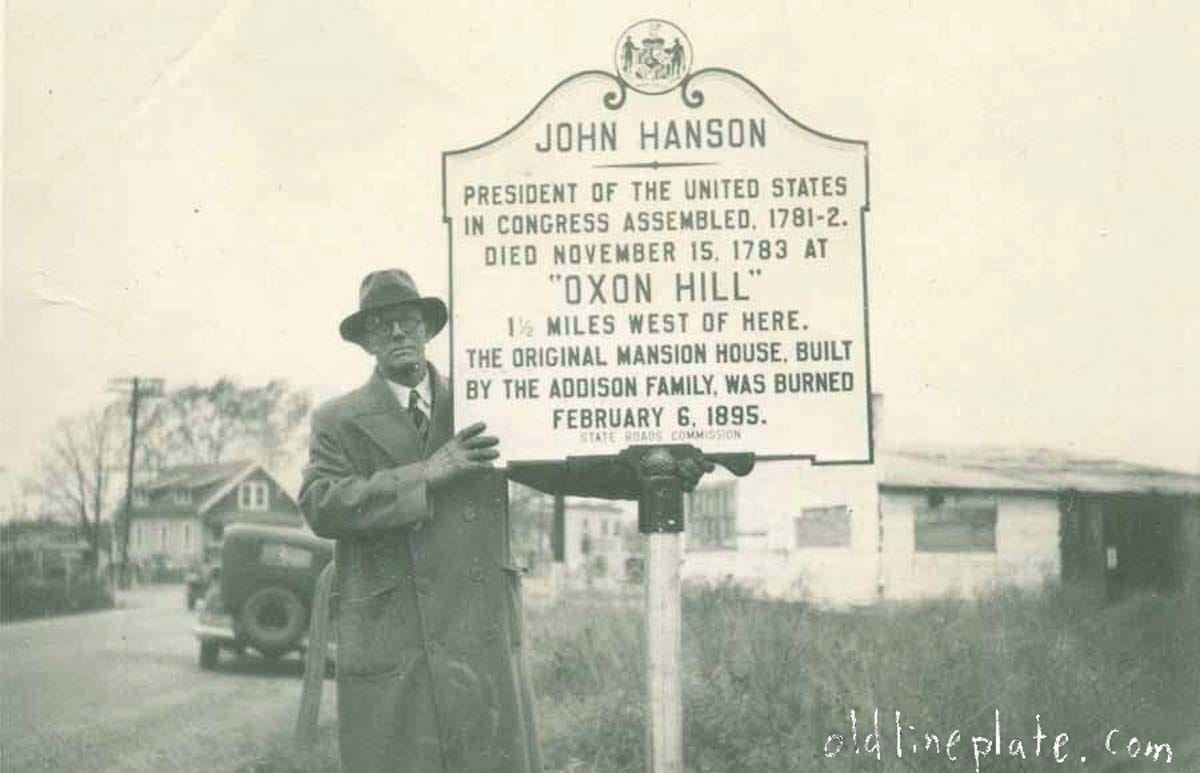
(This was an interesting connection for me because my boyfriend maintained a map of Maryland historical markers. Many of our early dates entailed driving around the state, photographing the markers as we encountered them, growing the map bit by bit.)
After five years of research and planning (and a lot of talk and procrastination). I was finally getting my website Old Line Plate off the ground again. I thought I might have some fun interactions, gain a little readership. I committed to two years. Two years passed quickly, and I extended my goal to five. 2010 came and went, and I kept going.
I can't believe it's been ten years.
I make no claims to the importance of Old Line Plate in the world, or even in Maryland. I can only speak for its importance in my own life. From that first prolific year of making a post every single week, to the slowed pace (I enrolled in college, and then a pandemic happened), to several books, many speaking engagements and interviews, back around to my continued commitment to making and writing about Maryland recipes, Old Line Plate has become my calling in life. Its my way to connect with wonderful people and learn about new things, to become a better cook, a better person, and a better researcher.
To that end, I recently took myself to the Maryland Center for History and Culture, where I'd requested a box from the J. Alexis Shriver papers collection.
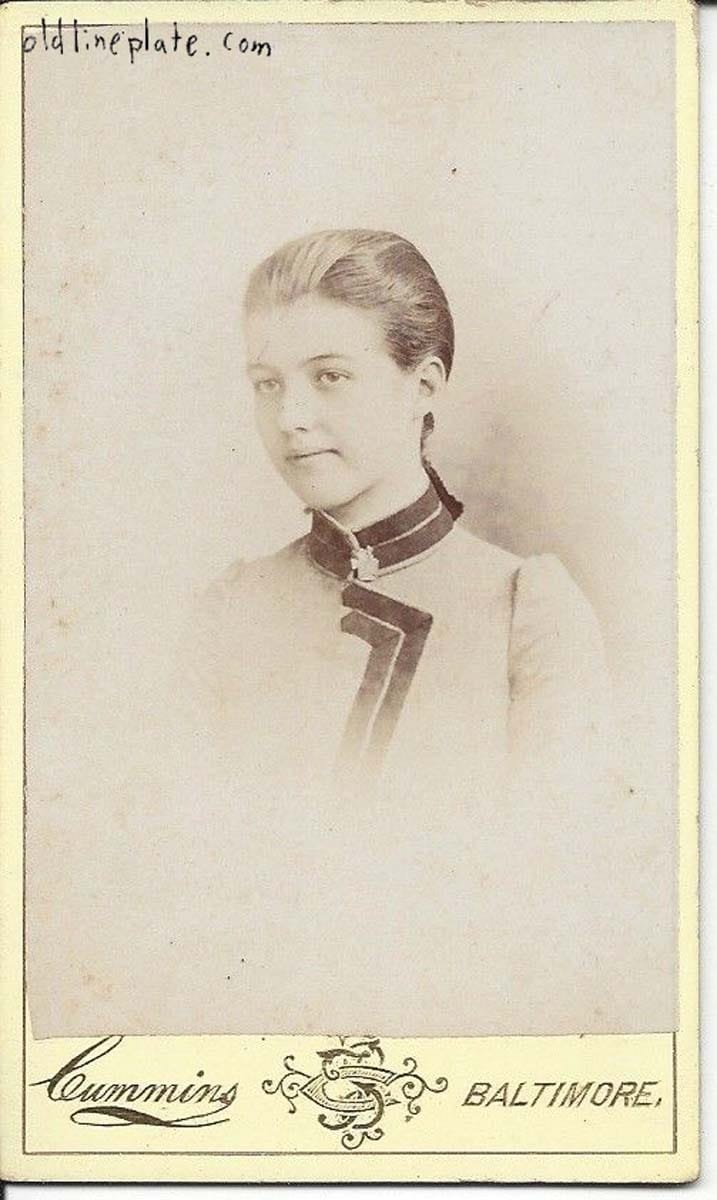 Harriet Van Bibber Shriver | Now as then, Mrs. Shriver somewhat alludes me somewhat. She was born Harriet Lewis Van Bibber in 1873. Her father was a lawyer and Judge in Harford County. She married Joseph Alexis Shriver in 1900. They had four children. Unfortunately, the Shriver papers are not about Harriet or Joseph's personal lives. The collection consists primarily of letters concerning J. Alexis Shriver's obsessive quest to document the travels of George Washington in Maryland and beyond. |
When I went to MCHC to view some of Shriver's letters, I thought of the many hours I'd spent in that library, starting in 2016, viewing cookbooks that I had not imagined existed when I started my database. Handwritten manuscripts, spattered with cake batter and oil. Hundreds of newspaper clippings never tested. Recipes passed down for generations on scraps of paper. Novel new recipes using fad gadgetry.
Now here in 2025, instead of recipes, I was looking through typewritten letters. In 1931, Shriver wrote to Paul Wilstach in Washington DC: "Miss Mollie Ash… tells me that you are contemplating a book on old Maryland houses in the tidewater section, and were particularly interested in the houses at which George Washington stopped," he wrote, explaining that he was heading a committee that had already compiled some of that information. "It will give me a great deal of pleasure to co-operate with you in any way possible." He offered up photographs and contacts, and a personal tour of sites in his home region of Harford County.
Other letters thanked people for tips and clues about Washington's stays. Some people requested intel from Shriver, and he eagerly obliged.
In a letter dated August 8th, 1932, Shriver asked Brother George Zachary, Custodian of Alexandria-Washington Lodge No. 22 if he was aware of the Lodge having possession of goblets manufactured for Washington. Shriver's letter was based on "a legend in Frederick County" that Washington had received the goblets from Amelung Glass Works and that they were now at the Lodge. "If that is a fact," Shriver enquired whether "this Commission could have photographs of the same." “A legend.” Hearsay. Shriver was leaving no stone unturned. | 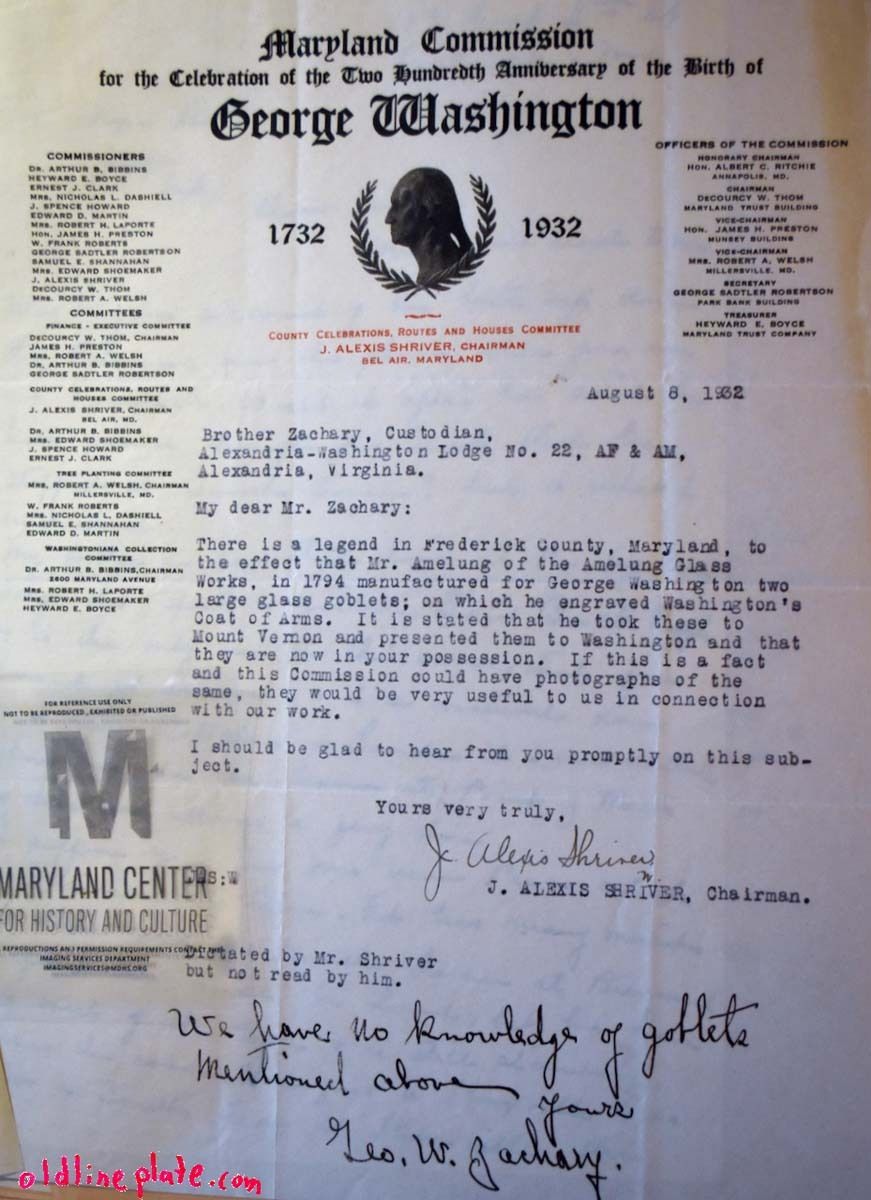 |
It was this letter which made me realize that, despite my lack of interest in the travels of George Washington, and their complete irrelevance to the celery soup, I was looking at these letters for a reason.
I was looking at these letters because Shriver was a lot like me. I thought of my travels to view cookbooks, and my embarrassing inquiries to people and to historical societies, in searches of rare copies of items I'd read about in old newspapers or other random sources. My complete inability to leave well enough alone, on the chance that there was one more book out there, more information to add to my database. I was looking at the letters of a man on a mission, obsessed and determined.
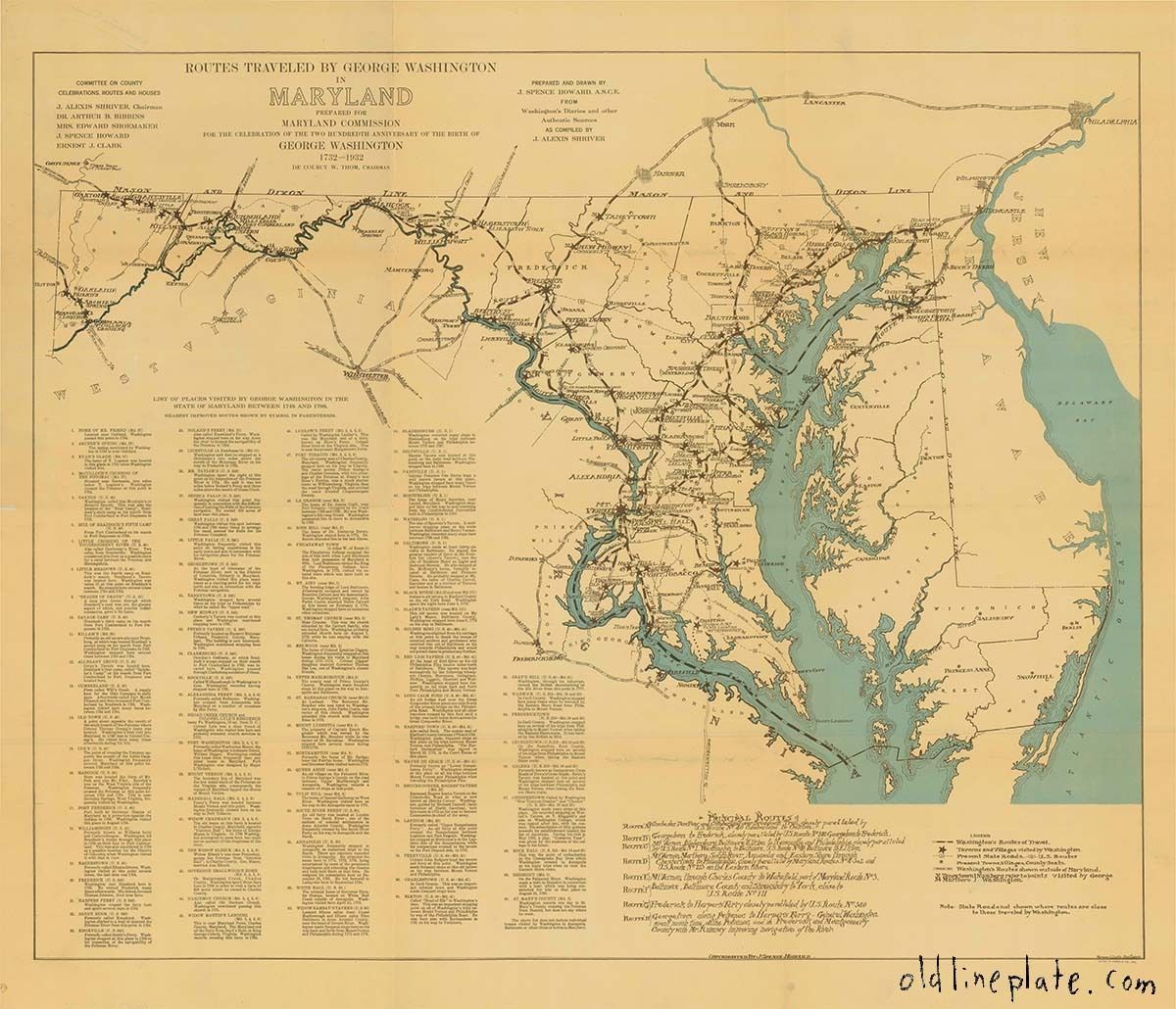
George Washington's Travels in Maryland
The letter to George Zachary was returned with a handwritten note at the bottom. "We have no knowledge of goblets mentioned above."
Shriver's research culminated in the creation of a large map. I couldn't bring myself to unfold the huge brittle copy in the collection. I came home and found an updated version. A letter to Shriver from John C. Fitzpatrick of the United States George Washington Bicentennial Commission implied Shriver's map was not perfect, saying "Don't let the errors bother you. It is the kind of work which you realize you can best do when you have finally finished it, and you want to start in and do the whole thing over again." To this, too, I can relate.
It's rare that I get around to a do-over. There is still so much to read about, taste and to try. But in celebration of ten years I knew I wanted to make the soup once again.
I had written before that this was a pain to make. I don't know what has changed but I didn't feel that to be the case at all. I could have used more celery or - better yet - delicious dark green farmers market celery, but this came together very quickly on a day when I was doing other things in and out of the kitchen.
There are boxes and boxes of Shriver letters and I only looked at a small slice. I'm sure that, like me, Shriver had other obsessions and perhaps even other quixotic quests. But it is his time spent tracking George Washington that made the most impact, that put the historical markers beside the road, where they stand today. My boyfriend who cataloged those markers is now my husband. At some of the locations those markers highlight, I have done speaking engagements, talking about recipes.
I can only hope that my research and my cookbook library (eventually to be donated) have some impact into the future, or that some historian, on a quest of their own, will find something within it of value.
I recognize many of the names in the Shriver letters, as people who contributed recipes to the Maryland's Way Cookbook in the 1960s. A loose community of history lovers, with different locations and passions, interwoven stories. That's what we get in our lifetimes: not the next generation quixotic historian, but the friends, the people, enthusiastic and generous with their stories and information and time. That is what Old Line Plate has given me, and it is what I try to give back for as long as I am able.
Appearances, news, other tidbits: |
Baltimore's Culinary History at Homewood Museum |
Reply