- Old Line Plate
- Posts
- Custard Cottage Cheese Pie, Mrs. Henry W. Lenz
Custard Cottage Cheese Pie, Mrs. Henry W. Lenz
A mundane entry in the quest for the perfect Smearcase

Kara Harris
June 03, 2025

I recently had the privilege of giving a talk at the Homewood Museum on Johns Hopkins University's campus. I focused on Baltimore's culinary history, but or course there was plenty about Maryland in general.
After the talk, someone asked a question about the influence of immigrants on Maryland cuisine. "Honestly," I said, "if I had just watched my talk and were to critique it, I would say it didn't have enough emphasis on the impact of German Marylanders."
It hadn't really struck me until that moment. Yes, I always mention German immigration to Baltimore, and the Pennsylvania Dutch cusine in Maryland. But it's only in the past few years that I've considered the long legacy of Germans on the regions west of Baltimore.
Thanks to Smearcase and Kinklings, I've found myself on the genealogical path of many families and communities who settled into lives of agriculture in our state.
St. Paul's Lutheran Church in Upperco has a historical marker denoting it as the oldest Lutheran congregation in Baltimore County. Its recorded history dates back to 1794.

St. Paul's Lutheran Church, MD Historical Trust
Glady's Clements Lenz is buried in the St. Paul's Cemetery along with her husband Henry, and her parents, Hazel and Oliver Clements.
Gladys contributed two recipes to "Cook and Tell," a cookbook produced by the Arcadia Ladies Auxiliary Vol. Fire Co. in 1945. One of her recipes is for Strawberry Cake and the other is for this Custard Cottage Cheese Pie, which struck me as a variation of Baltimore's beloved smearcase cheesecake. Glady's family lineage traces back to generations of farmers in Maryland.
Gladys was born in 1917 in Baltimore but lived most of her life in Upperco. She died in 1999. Her findagrave memorial states that she descended from the Upperco family for which the town was named. According to the German Marylanders website, the name is an Americanization of the German "Opferkuchen." Gladys' few newspaper mentions are related to the 1995 death of her husband Henry, who was a member of the Order of the Eastern Star.
Henry, as evident by his last name, has German grandparents on one side and great-grandparents on the other.
We can never know the true origin of Gladys' recipe, but it turned out a pie with a similar texture to smearcase. I made sure to find cottage cheese that was free from thickeners like guar gum. I'd want to give this one a try again to compare and contrast with Carolyn Yingling's "Cheese Cake," but both recipes offer some advances over other internet smearcase cheesecake recipes I previously tried. |

Starting with the hand-carved 1798 tombstone of Johann Wilhelm “William” Eltzroth, the cemetery of St. Paul's Lutheran is the final resting place for generations of German Marylanders and their families. Their influence lives on in the food we eat in Baltimore and beyond.
Cookbook Corner (the latest from Instagram)
 |  |
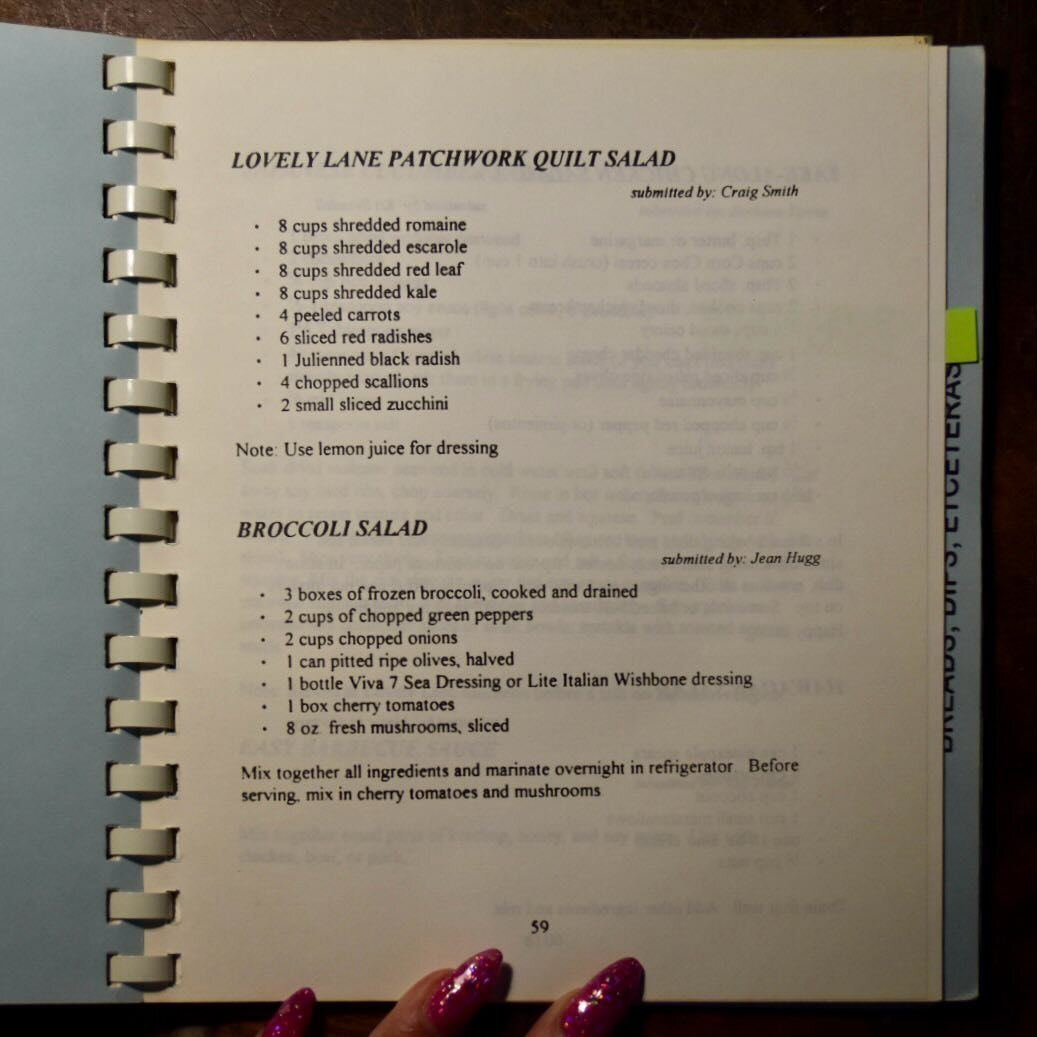 |  |
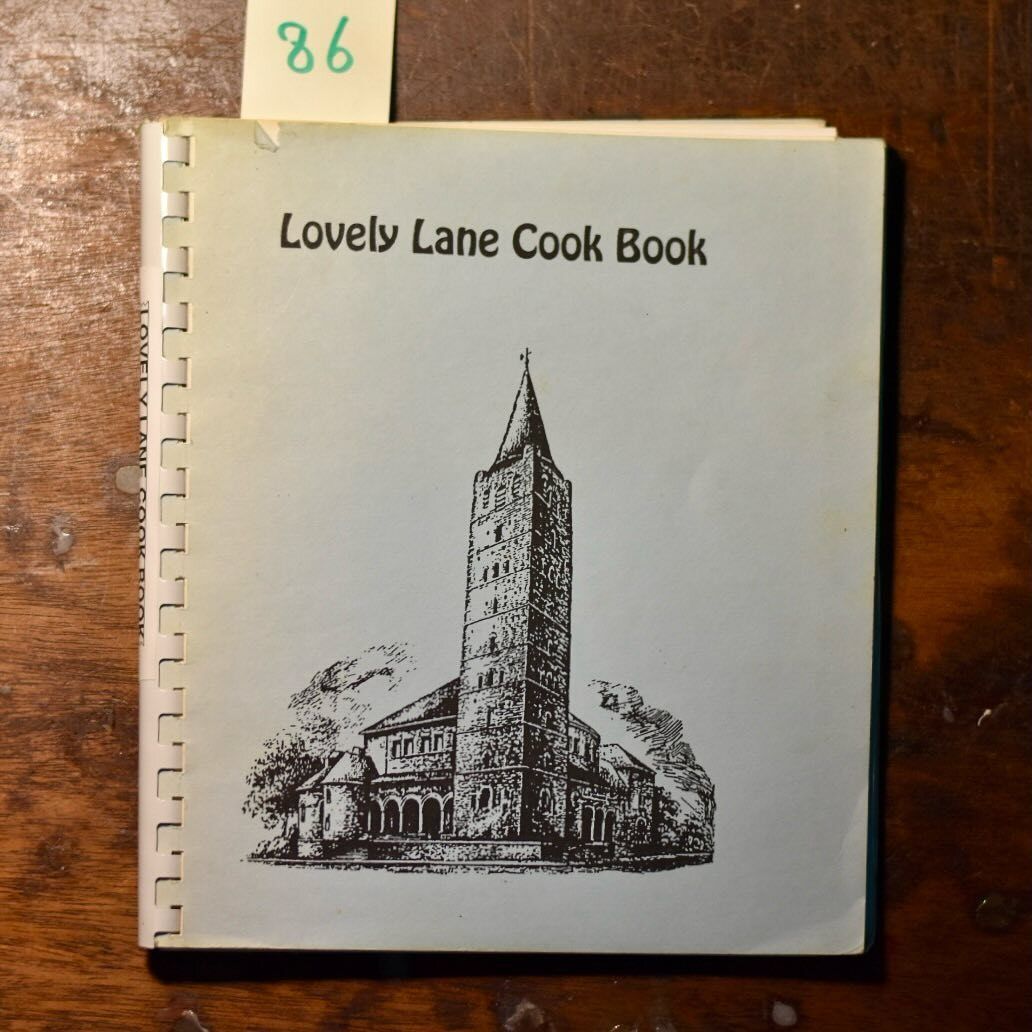
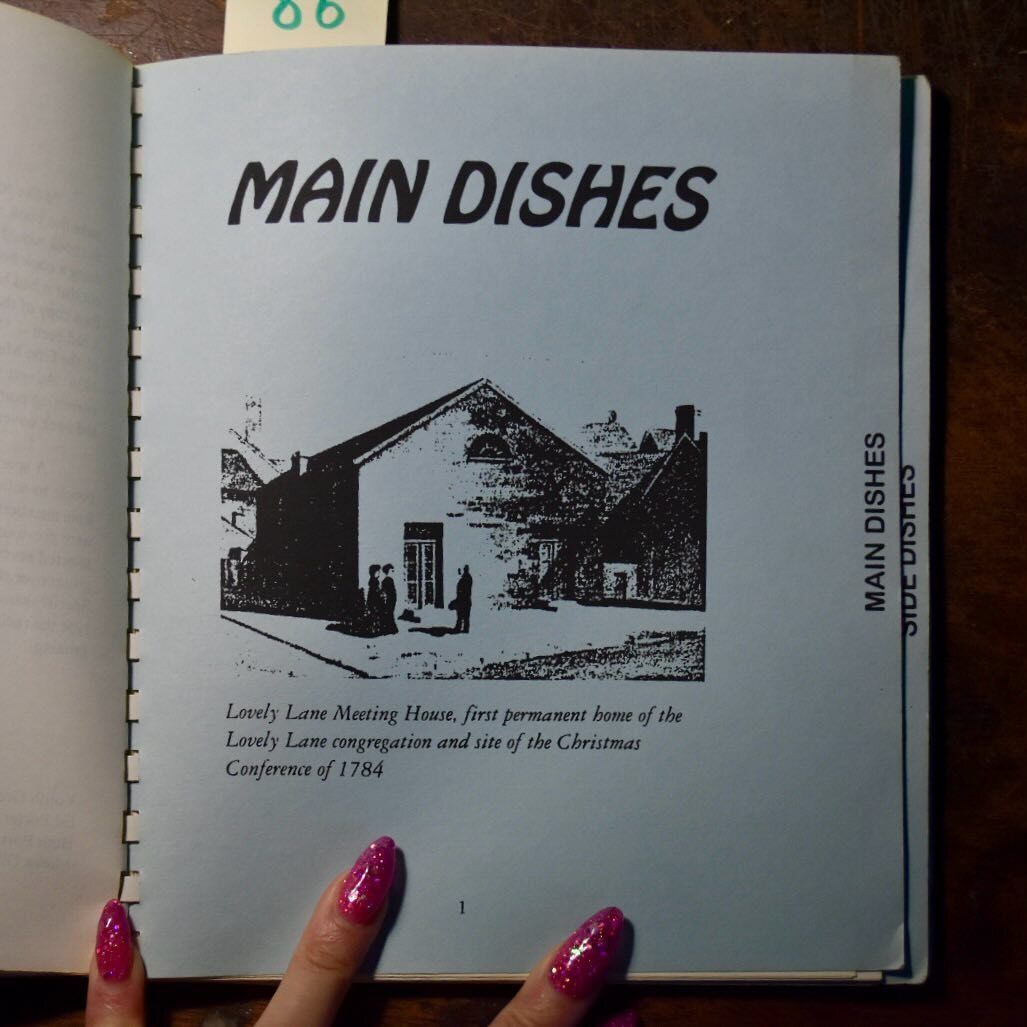
Many of us in the neighborhood have had the privilege of visiting the historic Lovely Lane Methodist Church, perhaps for the more questionable privilege of hearing neighbors squabble over local matters. I’m happy to have this 1990s cookbook from the church. Many prominent Charles Villagers contributed. I am most intrigued by the international dishes which were served at events where world religions were discussed.
Appearances, news, other tidbits:


Donate to Old Line Plate
No one is under any obligation at any time; this is here for those who can and want to throw a few bucks my way. All content will remain free. Donations will be primarily used for the development of my next book project, such as ingredients to update a recipe, books, and site subscriptions/memberships.
Readers who can’t (or dont want to!) donate continue to help me in so many ways from telling others about my work to helping me find books at estate sales. I feel so supported by my wonderful readers!
 Donate
Reply