- Old Line Plate
- Posts
- Harvey Salad Dressing, Miss Lulie Poole Hooper
Harvey Salad Dressing, Miss Lulie Poole Hooper
vaguely Caeser-inspired, this recipe takes things to another level

Kara Harris
October 13, 2025
I have been so busy working on A Culinary Tour of Green Mount Cemetery that I have not been posting much or doing a lot else lately! Thanks so much to everyone who has supported the tour and these efforts… I can’t wait to dig in to my backlog of recipe posts and new digital projects!

The 1936 “Lovely Lane Cook Book” produced by the historic Lovely Lane Methodist Church contains a lot of “dainty” recipes. There’s Date and Nut Bread; cakes and cookies; ice box rolls; Frozen Banana Salad. There’s luncheon dishes and cheese fondue and “Fruit Punch to Serve Ten.”
Like many church cookbooks, “Lovely Lane Cook Book” was full of recipes worthy of an elegant ladies' luncheon or a bridge game with tea.
And then there is Lulie Hooper’s recipe for “Harvey Salad Dressing.” Beef bouillon; chopped olives, blue cheese, garlic, catsup, capers, vinegar, Worcestershire sauce. Hooper’s recipe is an umami bomb packed with sodium, acidity, and pungency. Though it seems vaguely Caeser dressing-inspired, this recipe takes things to another level.
It is likely that the dressing name is somehow related to Fred Harvey, a pioneer in railroad cuisine and later purveyor of a chain of restaurants. However, I couldn’t find any other version of this recipe among the recipes associated with Harvey.

Fred Harvey's Lunchroom at Chicago's Union Station in 1943
Miss Lulie Hooper was the granddaughter of Robert Poole, whose family had immigrated to Baltimore from Ireland when he was a child. Poole operated a foundry and machinery shop, which moved to Woodberry in 1853. With its location near the Northern Central Railway and the area’s many textile mills, Poole and his partner German Hunt did good business. The next year, the foundry would produce ironwork for the roof, dome and columns of the U.S. Capital building.
The expansion of the mills and the housing for their workers continued. By the Civil War, Woodberry was the largest industrial town in the state — outside of Baltimore.

In 1888, Baltimore City expanded northward from its North Avenue border to encompass Woodberry and its surroundings. The annexation increased the city’s size from ten to thirty square miles.
William E. Hooper had founded the similarly successful Hooper Mills not far from Poole’s mills.
In 1871, Hooper's son James Edward Hooper married Robert Poole’s daughter Sarah. James Hooper would eventually become the president of the merged Mount Vernon Woodberry Cotton Duck Company. Lulie Poole Hooper was the fourth of their six children.
Born into this wealthy family, Lulie pursued the typical charitable activities of a woman of her class and joined the Foreign Missionary Society of the Methodist Church, which took her on trips to Asia and the Pacific. She was educated at Goucher College, founded in 1885 by the Methodist Church, and with ample funding from the Poole-Hooper family. Lulie graduated in 1896 and remained involved with the college for the rest of her life, eventually having Hooper Hall named in her honor.
 Lulie Poole Hooper | Margie Luckett included Lulie Hooper in “Maryland Women,” a three-volume collection of biographies of contemporary and historical women of the state published in 1931. Although most of the women in the books come from obvious wealth, there is no particular political bent to the collection. The activities and causes of the women profiled range from gracious entertaining to women’s suffrage. In Lulie’s case, Luckett didn’t have much to say other than to mention the missionary work and the college. |
It is census records and Lulie’s obituary that lend a little dimension to Lulie's story. By 1950, Lulie was living with her partner Gertrude Nickerson in an apartment building at 100 West University Parkway. Gertrude was also a Goucher graduate, from the class of 1899. When Hooper died in 1955, she left $5000 (today’s equivalent of roughly 60,000) in a trust to Nickerson.
Society pages through the years mentioned Lulie, Gertrude, or both in snippets that suggest a life of traveling and socializing with intellectuals, many of them Goucher alumni. Although I found no indication of suffrage activism on either of their parts, they would have interacted with Baltimore suffragettes, philanthropists, and patrons of the arts.
When Gertrude died in 1964, she was not buried at Greenmount with her partner, but in Pennsylvania with her parents.
Outside of some items that Lulie Hooper donated to Goucher College’s art collection, her contribution to the artistic and intellectual life of Baltimore in the early 19th century is largely undocumented. Thanks to her three additions to the Lovely Lane Cookbook —for Mint Sauce, Imperial Cake, and this salad dressing— we at least get a glimpse into her culinary world.
Recipe:
1 pint olive oil
2 Sterno beef tablets
20 chopped olives
1/4 pound Roquefort cheese, chopped
2 buttons garlic, chopped
1 teaspoon paprika
1 tablespoon salt
1/2 pint apple vinegar
2 tablespoons sugar
2 tablespoons capers
1/2 pint tomato catsup
2 tablespoons Worcestershire sauce
cayenne pepper to taste
This will make a quart of dressing which will keep until used.
Recipe from "Lovely Lane Cook Book," c. 1936, The Woman's Guild First Methodist Episcopal Church
Cookbook Corner (the latest from Instagram)
 |  |
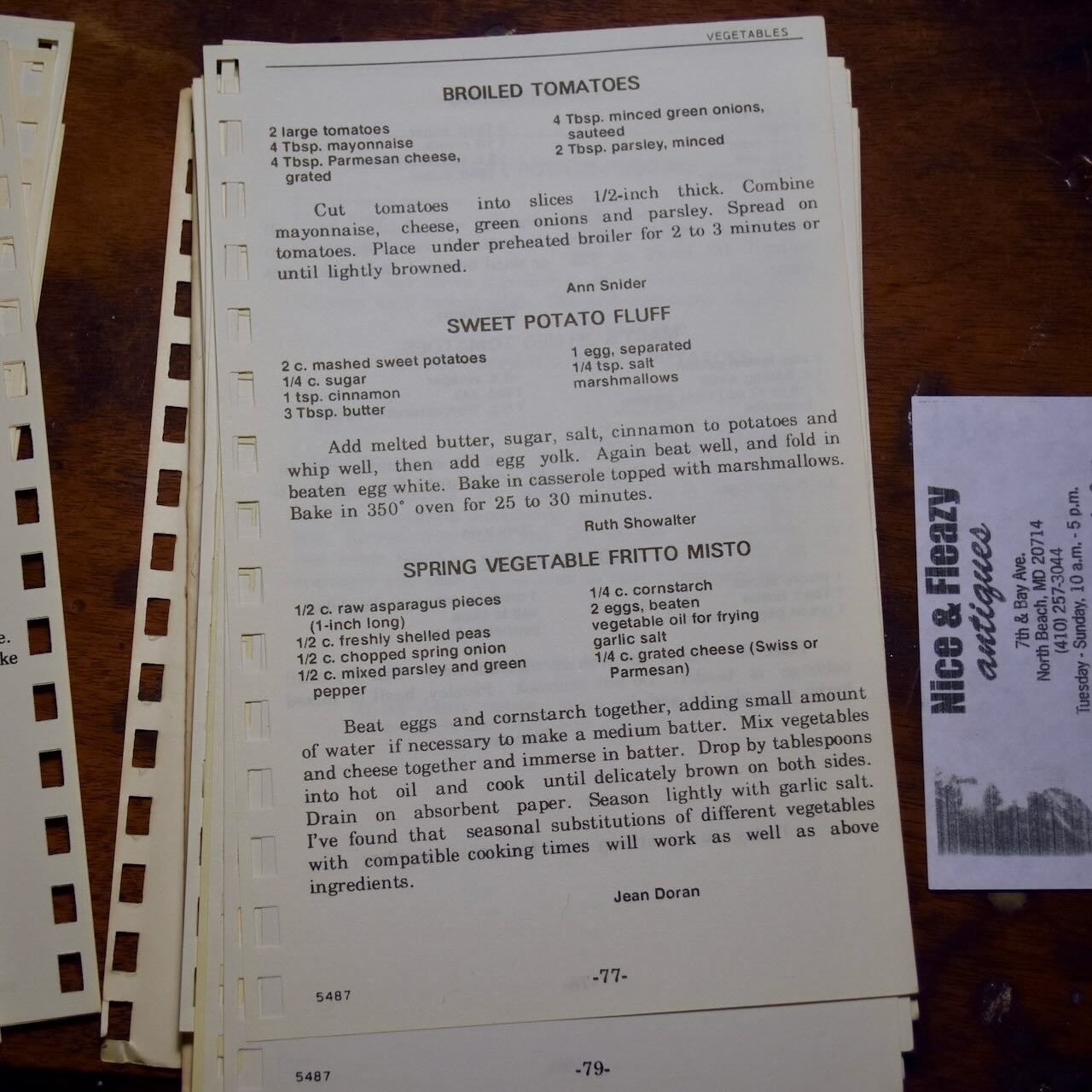 | 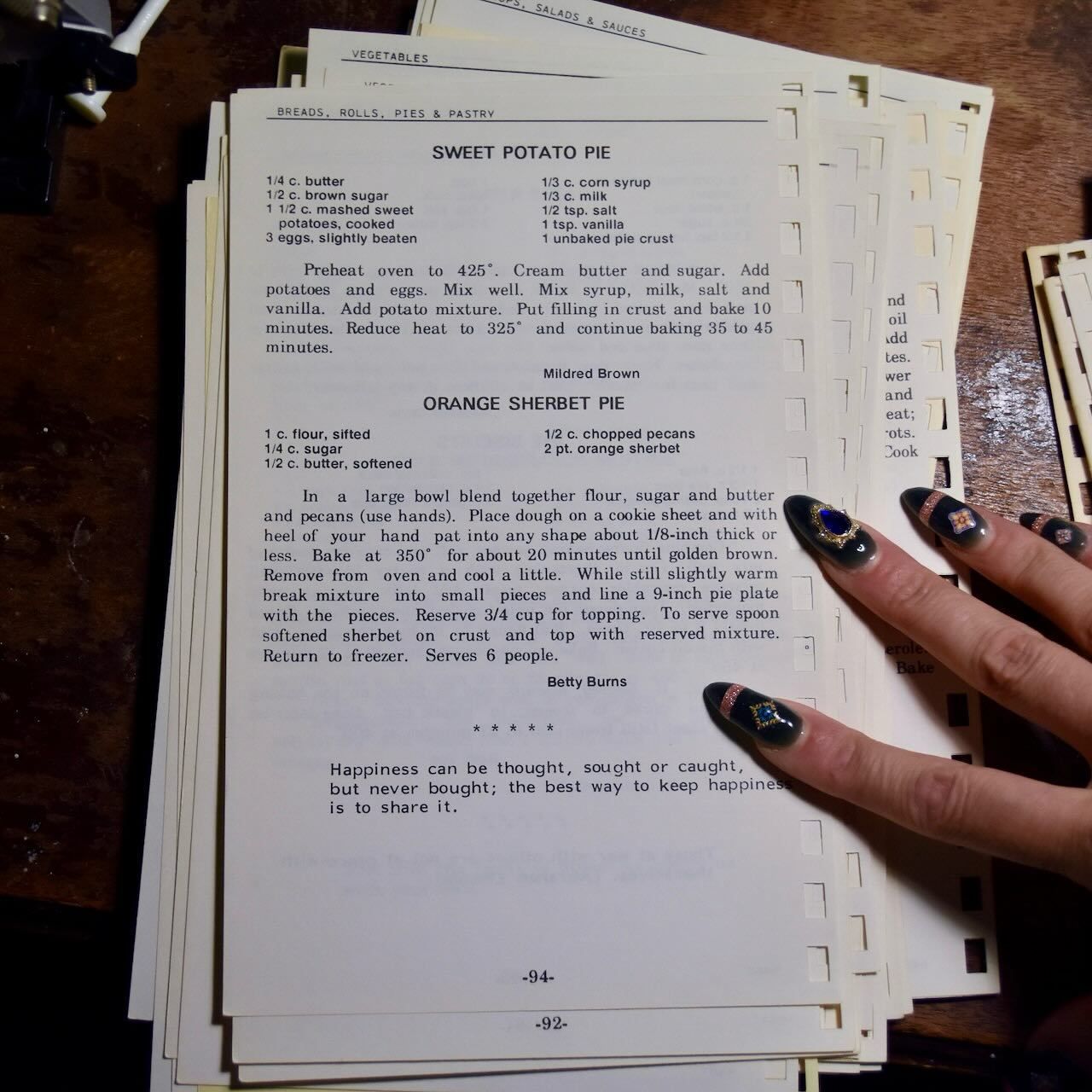 |
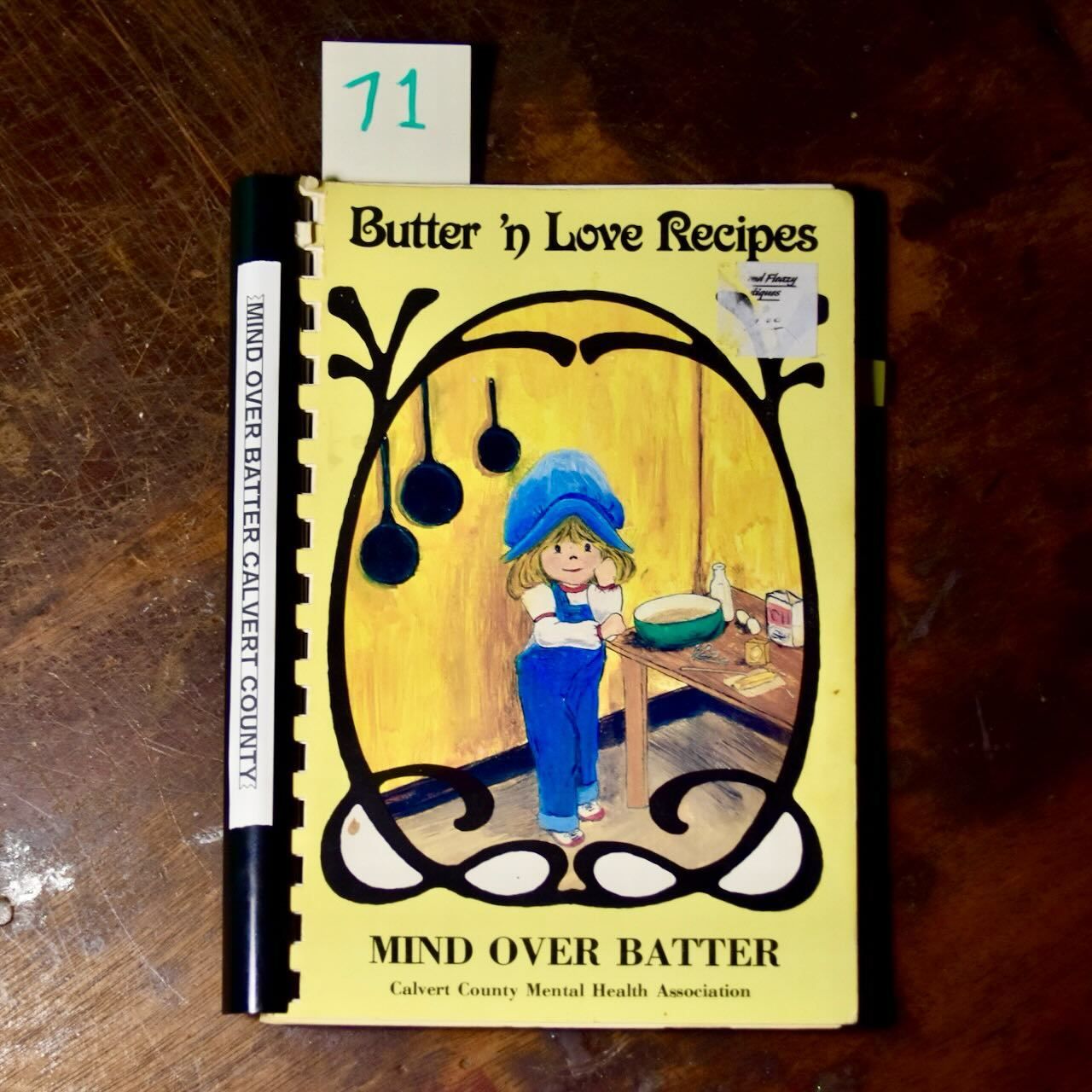
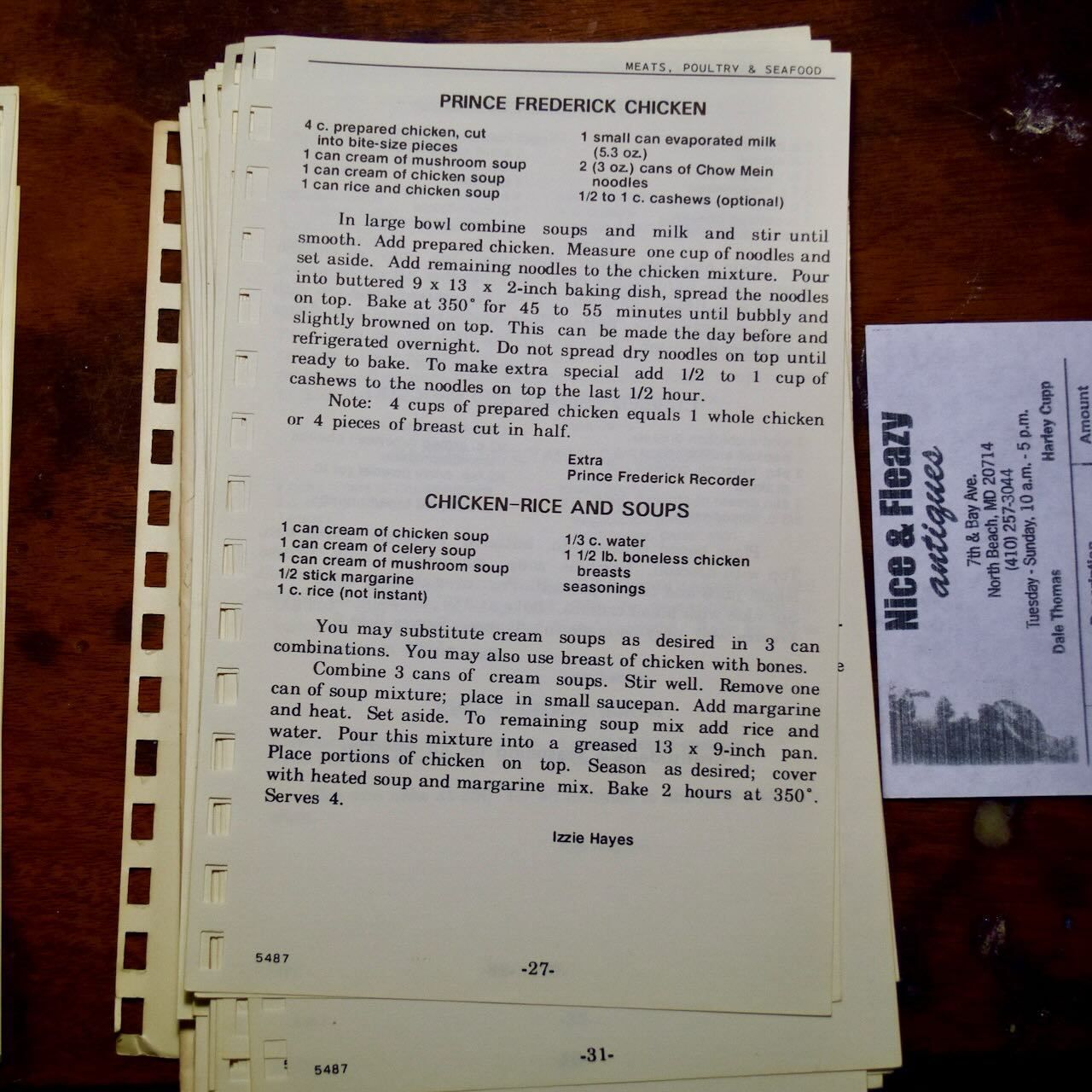
I once made a salad out of this book containing bananas, fruit cocktail and Tang powder.
I must have data entered this book back before I always added the people as a matter of course. Finding only the recipe names in my database made me pull this one to prioritize getting those names in.
I got a good deal on a comb binder on eBay so now I can take apart books like this, scan and reassemble them.
Appearances, news, other tidbits:


Donate to Old Line Plate
I have come to the conclusion that it would be best to add a donation option to my newsletter. No one is under any obligation at any time; this is here for those who can and want to throw a few bucks my way. All content will remain free. Donations will be primarily used for the development of my next book project, such as ingredients to update a recipe, books, and site subscriptions/memberships.
Readers who can’t (or dont want to!) donate continue to help me in so many ways from telling others about my work to helping me find books at estate sales. I feel so supported by my wonderful readers!
 Donate
Reply